
For many, transitioning from road running to trail running opens up a whole new world of adventure. However, this exciting leap also introduces a unique set of physical demands. Understanding these challenges is the first step towards building a resilient body, which is why a thoughtful approach to strength training beginner trail runner injury prevention is not just recommended, but truly essential. The allure of the trail is undeniable. The changing terrain, the fresh air, the feeling of moving through nature – it’s a powerful draw. The uneven surfaces, ascents, descents, and technical sections challenge the body in ways flat pavement simply doesn't. It's a fantastic journey, but one that comes with its own potential pitfalls, especially for those new to the sport.
- •Understanding the Unique Demands of Trail Running for Injury Prevention
- •Key Muscle Groups to Target for Strength Training Beginner Trail Runner Injury Prevention
- ◦Glutes (Gluteus Maximus, Medius, Minimus)
- ◦Hamstrings
- ◦Quadriceps
- ◦Calves (Gastrocnemius and Soleus)
- ◦Core Muscles (Abdominals, Obliques, Lower Back)
- ◦Ankle Stabilizers and Foot Intrinsic Muscles
- •Practical Exercises for the Beginner Trail Runner
- ◦Lower Body Exercises
- ◦Core and Stability Exercises
- •Integrating Strength Training into a Running Schedule
- •Common Pitfalls and How to Avoid Them
- •FAQ: Strength Training for Beginner Trail Runners
- ◦Should I lift heavy weights or focus on more repetitions with lighter weights?
- ◦Can strength training make me too bulky or slow for trail running?
- ◦Is it okay to feel sore after strength training?
Embarking on beginner trail running">trail running as a beginner means your musculoskeletal system is encountering novel stresses. While your cardiovascular fitness might be ready for the mileage, the specific muscular strength, stability, and proprioception required for navigating roots, rocks, and slippery paths often lag behind. This disparity is a common recipe for injury. Without adequate preparation, a seemingly minor stumble or an overly ambitious descent can lead to anything from twisted ankles and knee pain to more chronic issues like IT band syndrome or shin splints. My aim here is to explore how targeted strength work can serve as your most reliable defense, allowing you to enjoy the trails safely and sustainably.
This isn't about becoming a powerlifter; it's about building a robust, adaptable body that can withstand the unpredictable nature of the trails. It's about developing the foundational strength that translates directly into better balance, more efficient movement, and crucially, a significantly reduced risk of injury. We'll delve into the specific demands of trail running, the common vulnerabilities of new trail runners, and how a well-structured strength program can address these to ensure your trail adventures are filled with joy, not pain.
Understanding the Unique Demands of Trail Running for Injury Prevention
Trail running isn't just running in a different setting; it's a different sport altogether in terms of biomechanics and physiological demands. While road running is largely repetitive, trail running demands constant adaptation. Every step is an opportunity for your body to adjust to an uneven surface, a sudden incline, a tricky descent, or an unexpected obstacle. This constant variability is what makes it so engaging, but it's also what makes dedicated strength training beginner trail runner injury prevention so critical.
Consider the forces at play. When you run downhill, the impact forces on your knees and quads can be significantly higher than on flat ground. Navigating technical terrain requires rapid firing of smaller, stabilizing muscles around the ankles, knees, and hips to prevent falls. Climbing steep ascents taxes your glutes, hamstrings, and core in a way that flat running rarely does. Your proprioception – your body's awareness of its position in space – is constantly challenged and refined. A beginner trail runner often lacks the specific strength and neuromuscular control to handle these varied stresses efficiently, making them prime candidates for common overuse injuries or acute traumas.
Without specific strength training, a new trail runner might rely too heavily on their larger prime mover muscles, neglecting the crucial role of stabilizers. This can lead to muscular imbalances, fatigue, and ultimately, a breakdown in form when it matters most. For instance, weak glutes can lead to knee valgus (knees caving inwards) on descents, stressing the IT band and patella. A weak core can compromise overall stability, leading to inefficient movement and increased strain on the lower back and hips. These are not minor issues; they are direct pathways to sidelining injuries. Therefore, a comprehensive approach to strength training beginner trail runner injury prevention must specifically target these unique demands.
Core Principles of Effective Strength Training for Injury Prevention for New Trail Runners
When designing a strength program for a beginner trail runner, the focus should always be on building functional strength that directly translates to the movements and demands of the trail. This isn't about isolating muscles with machines; it's about movements that mimic running, jumping, balancing, and stabilizing. Here are some core principles:
- Compound Movements: Prioritize exercises that work multiple joints and muscle groups simultaneously. Think squats, lunges, deadlifts, and step-ups. These exercises build overall strength and coordination, which are vital for trail running.
- Unilateral Work: Trail running is inherently a single-leg sport. Every stride is a single-leg stance, and navigating uneven terrain often requires significant single-leg stability. Incorporating exercises like single-leg squats, Bulgarian split squats, and pistol squats (or progressions towards them) will build strength and balance crucial for preventing ankle rolls and knee instability.
- Core Strength: A strong core is the foundation of efficient movement and stability. It acts as the central link between your upper and lower body, transferring power and maintaining posture. Planks, side planks, bird-dogs, and anti-rotation exercises are essential.
- Proprioception and Balance: These are non-negotiable for trail runners. Exercises performed on unstable surfaces (e.g., balance boards, Bosu balls) or simply standing on one leg will significantly improve your body's ability to react to unpredictable terrain.
- Posterior Chain Dominance: The glutes and hamstrings (your posterior chain) are powerhouse muscles for propulsion and deceleration. Strengthening these is paramount for climbing and controlling descents. Glute bridges, Romanian deadlifts, and good mornings are excellent choices.
- Progressive Overload: To continue getting stronger, you need to gradually increase the challenge over time. This can be done by increasing weight, reps, sets, reducing rest time, or increasing the difficulty of the exercise.
- Consistency: Like running, strength training yields results through consistent effort. Aim for 2-3 sessions per week, allowing for adequate recovery.
These principles form the bedrock of any successful strength training beginner trail runner injury prevention strategy. They ensure that the strength you build in the gym directly translates to resilience and performance on the trails.
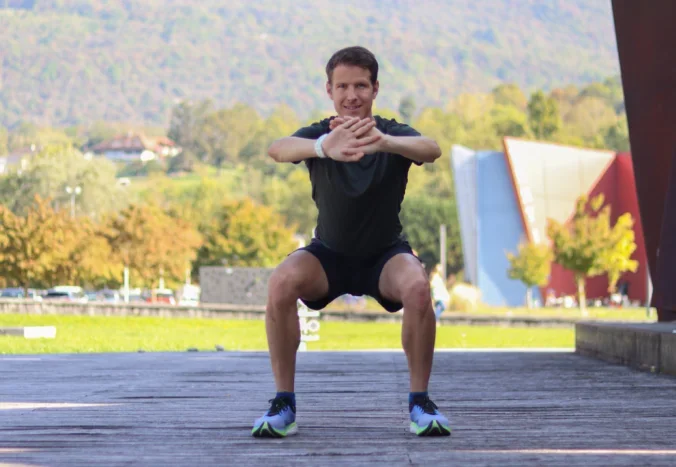
Key Muscle Groups to Target for Strength Training Beginner Trail Runner Injury Prevention
To effectively implement a strategy for strength training beginner trail runner injury prevention, it's helpful to understand which specific muscle groups are most critical and why. Focusing your efforts here will yield the greatest benefits for trail running specific demands.
Glutes (Gluteus Maximus, Medius, Minimus)
Often referred to as the powerhouse of running, strong glutes are essential. The gluteus maximus is crucial for hip extension, propelling you forward and uphill. The gluteus medius and minimus are vital for hip abduction and external rotation, which stabilize your pelvis and prevent your knees from caving inward, especially during single-leg stance or descents. Weak glutes are a primary contributor to common runner's ailments like IT band syndrome, runner's knee, and even lower back pain. Exercises like squats, deadlifts, lunges, glute bridges, and clam shells are excellent for targeting these muscles.
Hamstrings
Working in conjunction with the glutes, the hamstrings are critical for hip extension and knee flexion. They play a significant role in propulsion during running and are incredibly important for deceleration, especially on downhills. Strong hamstrings help protect the knees and reduce the risk of strains. Romanian deadlifts, hamstring curls (bodyweight or machine), and good mornings are effective.
Quadriceps
The quads (front of the thigh) are heavily engaged during uphill climbs and, perhaps even more critically, during descents. They act as brakes, eccentrically lengthening under load to absorb impact and control your movement downhill. This eccentric loading can be particularly taxing for beginners, leading to delayed onset muscle soreness (DOMS) and increasing injury risk if not properly conditioned. Squats, lunges, step-ups, and eccentric quad exercises (like slow, controlled descents from a step) are beneficial.
Calves (Gastrocnemius and Soleus)
Your calves are constantly working on trails, providing propulsion, absorbing impact, and stabilizing your ankles. They are crucial for pushing off on inclines and reacting quickly to changes in terrain. Weak calves can contribute to Achilles tendonitis, shin splints, and plantar fasciitis. Calf raises (standing and seated), single-leg calf raises, and plyometric exercises like hopping are important.
Core Muscles (Abdominals, Obliques, Lower Back)
A strong core is the foundation for all movement. It stabilizes your trunk, helps transfer power from your upper body to your lower body, and maintains proper posture. On trails, a strong core prevents excessive rotation, improves balance, and reduces strain on your back and hips. Planks (front and side), bird-dogs, Russian twists, and dead bugs are excellent for building comprehensive core strength. For deeper insight into core stability for runners, you might find resources from the American Council on Exercise helpful: ACE Fitness on Core Training for Runners.
Ankle Stabilizers and Foot Intrinsic Muscles
These smaller muscles are incredibly important for reacting to uneven terrain and preventing ankle sprains. While often overlooked, their strength and responsiveness are paramount for trail runners. Exercises like ankle rotations, toe raises, heel walks, and standing on one leg with eyes closed can significantly improve ankle stability and proprioception.
Practical Exercises for the Beginner Trail Runner
Now that we’ve identified the key muscle groups, let’s look at some practical exercises that you can incorporate into your strength routine. Remember to focus on proper form over heavy weight, especially when starting out. Aim for 2-3 sets of 10-15 repetitions for most exercises, or hold planks for 30-60 seconds.

Lower Body Exercises
- Bodyweight Squats: Stand with feet shoulder-width apart, chest up. Lower your hips as if sitting in a chair, keeping your back straight and knees tracking over your toes. Go as deep as comfortable while maintaining good form.
- Lunges (Forward and Reverse): Step forward or backward with one leg, lowering your hips until both knees are bent at approximately 90 degrees. Ensure your front knee doesn't go past your toes and your back knee hovers just above the ground. Alternate legs.
- Bulgarian Split Squats: Place the top of one foot on a bench or sturdy chair behind you. Perform a lunge, focusing on stability and balance. This is excellent for unilateral strength.
- Glute Bridges: Lie on your back with knees bent and feet flat on the floor, close to your glutes. Lift your hips off the ground until your body forms a straight line from shoulders to knees. Squeeze your glutes at the top.
- Single-Leg Romanian Deadlifts (RDLs): Stand on one leg, slight bend in the knee. Hinge at your hips, extending the other leg straight back for balance, keeping your back flat. Reach towards the floor with your hands. This builds hamstring and glute strength, plus balance.
- Step-Ups: Use a sturdy box or bench. Step up with one leg, driving through your heel, bringing the other knee up. Control the descent. This mimics uphill climbing.
- Calf Raises: Stand on a flat surface or the edge of a step. Rise onto the balls of your feet, holding briefly at the top, then slowly lower. Perform both with straight knees (gastrocnemius) and bent knees (soleus).
Core and Stability Exercises
- Plank: Hold a straight line from head to heels, engaging your core and glutes. Avoid sagging hips or arching your back.
- Side Plank: Support your body on one forearm and the side of your foot, keeping your body in a straight line.
- Bird-Dog: Start on all fours. Extend one arm forward and the opposite leg backward, keeping your core stable and hips level.
- Dead Bug: Lie on your back with knees bent at 90 degrees and arms extended towards the ceiling. Slowly extend one arm and the opposite leg towards the floor without letting your lower back arch.
- Single-Leg Balance: Simply stand on one leg for 30-60 seconds. Progress by closing your eyes or standing on an unstable surface like a folded towel or cushion.
These exercises, performed consistently, will significantly contribute to your strength training beginner trail runner injury prevention goals. Remember, the goal is functional strength, not just looking strong.
Integrating Strength Training into a Running Schedule
One of the most common questions from beginner trail runners is how to fit strength training into an already busy running schedule. The key is smart integration, not overload. You don’t need to do a two-hour strength session every day. For beginner trail runners, 2-3 strength sessions per week, each lasting 30-45 minutes, is often ideal. This allows for adequate recovery and ensures you're not overtraining, which can be just as detrimental as undertraining when it comes to injury prevention.
Consider scheduling your strength sessions on non-running days, or after your running workouts if you prefer. Avoid heavy leg days before your longest or most challenging trail runs. For example, if your long run is on Saturday, you might do strength on Tuesday and Thursday. If you run three times a week, you could do strength on your two non-running days, or even a shorter session on a running day if it's not too intense. The exact timing is less critical than the consistency and the quality of the work. Listen to your body; if you're feeling overly fatigued, scale back or take an extra rest day.
It’s also important to remember that strength training is not a replacement for running; it's a complement. The goal is to make your running more efficient, enjoyable, and injury-free. As you get stronger, you'll likely notice improvements in your uphill power, downhill control, and overall resilience on technical terrain. This symbiotic relationship is crucial for long-term success on the trails.
The Role of Mobility and Stability in Strength Training Beginner Trail Runner Injury Prevention
While strength is often the primary focus, mobility and stability are equally vital components of comprehensive strength training beginner trail runner injury prevention. These aren't just buzzwords; they represent critical aspects of how your body moves and reacts on the trail.
Mobility refers to the range of motion at your joints. Good mobility means your muscles can lengthen and shorten effectively through their full range, allowing for fluid, unrestricted movement. For trail runners, this includes ankle dorsiflexion (how much your shin can come over your foot), hip flexion and extension, and thoracic spine rotation. Limited mobility in these areas can restrict your stride, put undue stress on other joints, and increase the risk of injury. Tight hips, for instance, can lead to compensation in the lower back or knees. Incorporating dynamic stretches as a warm-up and static stretches or foam rolling as a cool-down can significantly improve mobility. Yoga or Pilates can also be fantastic additions.
Stability, on the other hand, is the ability to control movement and maintain balance. It's about how well your muscles can stabilize a joint during movement, particularly under load or on an unstable surface. This is where those smaller, deeper stabilizing muscles come into play. On a trail, every time you land on an uneven rock or navigate a tricky descent, your body's stability systems are firing to prevent a fall. Exercises like single-leg balance work, planks, and bird-dogs directly enhance stability. Proprioceptive exercises, like standing on one leg with your eyes closed, are particularly effective for improving your body's unconscious ability to react to instability.
A truly effective program for strength training beginner trail runner injury prevention will weave these elements together. You need the strength to generate force, the mobility to move through a full range of motion, and the stability to control that motion, especially when the ground beneath your feet is constantly changing. Neglecting any one of these aspects leaves a gap in your protective armor.
Common Pitfalls and How to Avoid Them
Even with the best intentions, beginner trail runners often fall into common traps that can hinder their progress and increase injury risk. Being aware of these can help you navigate your journey more smoothly.
- Too Much, Too Soon: This is arguably the biggest pitfall. Excited by the new challenge, beginners often increase mileage, elevation, and technical difficulty too quickly. The body needs time to adapt. Gradually increase all variables, following the 10% rule as a general guideline (don't increase weekly mileage by more than 10%).
- Neglecting Recovery: Adequate sleep, nutrition, and rest days are just as important as your training sessions. Without proper recovery, your body can't adapt, strengthen, or repair itself, leading to fatigue and increased injury susceptibility.
- Ignoring Pain: There's a difference between muscle soreness and pain. Sharp, persistent, or worsening pain is a sign that something is wrong. Pushing through it almost always leads to a more significant injury. Learn to listen to your body and don't be afraid to take a rest day or seek professional advice.
- Poor Form: Especially with strength exercises, poor form can be ineffective at best and injurious at worst. If unsure, watch instructional videos, consult a coach, or even film yourself to check your technique.
- Skipping Warm-ups and Cool-downs: These are not optional. A dynamic warm-up prepares your muscles and joints for activity, while a cool-down aids recovery and flexibility.
- Inadequate Footwear: While not strength training related, wearing inappropriate shoes for trail running (e.g., road shoes on technical trails) significantly increases the risk of ankle sprains and falls. Invest in proper trail running shoes with good grip and protection.
Avoiding these common mistakes is a significant part of successful strength training beginner trail runner injury prevention. It’s about being smart, patient, and consistent, rather than just pushing hard.
FAQ: Strength Training for Beginner Trail Runners
What's the absolute minimum strength training I should do for trail running injury prevention if I'm short on time?
If time is extremely tight, prioritize 1-2 sessions per week focusing on compound movements and unilateral exercises. Think squats, lunges, glute bridges, and planks. Even 20-30 minutes of high-quality, focused work can make a significant difference for strength training beginner trail runner injury prevention compared to doing nothing at all. Consistency with these fundamental movements is key.
How long does it take to see results from strength training for trail runner injury prevention?
You might start feeling stronger and more stable on the trails within 4-6 weeks of consistent strength training. Visible changes in muscle mass might take longer, but improved coordination, balance, and reduced fatigue on runs can be noticed relatively quickly. Real, long-term injury prevention benefits build up over months and years as your body adapts and becomes more resilient.
Should I lift heavy weights or focus on more repetitions with lighter weights?
For beginner trail runner injury prevention, a mix is often best, but prioritize good form. Start with bodyweight or light weights to master technique, then gradually increase resistance. Higher repetitions (10-15 reps) with moderate weight build muscular endurance, which is highly relevant for trail running. However, incorporating some heavier lifts (6-8 reps) for foundational strength can also be beneficial as you progress.
Can strength training make me too bulky or slow for trail running?
This is a common misconception. Unless you are specifically training with extremely high volume and calorie surplus to gain significant muscle mass, strength training for trail running will primarily build functional strength, power, and resilience, not bulk that would slow you down. In fact, a stronger runner is often a more efficient and faster runner, especially on varied terrain, because they can maintain better form and exert more force with each stride.
Is it okay to feel sore after strength training?
Mild to moderate muscle soreness (DOMS - Delayed Onset Muscle Soreness) 24-48 hours after a strength session is normal, especially when you're new to it or introducing new exercises. However, debilitating pain, sharp pain, or pain that persists for more than 72 hours is not normal and should be investigated. Always distinguish between muscle soreness and joint pain or injury.
Stepping onto the trail is an experience that enriches life, connecting us with nature and pushing our physical boundaries. For the beginner trail runner, this journey is full of discovery and challenge. The path to safely enjoying these adventures, run after run, isn't just about accumulating mileage; it's profoundly shaped by the intentional work done off the trail.
Embracing a thoughtful approach to strength training, focusing on functional movements, stability, and mobility, is perhaps the most significant investment you can make in your running future. It allows you to build a body that isn't just capable of handling the trails, but one that thrives on their unpredictability, minimizing the risk of injury and maximizing the joy of every stride. This commitment to strength training beginner trail runner injury prevention is a commitment to a lifetime of healthy, exhilarating trail runs.